


Swiss cheese a little softer than Gruyères, Tête de Moine is eaten in the form of rosettes…
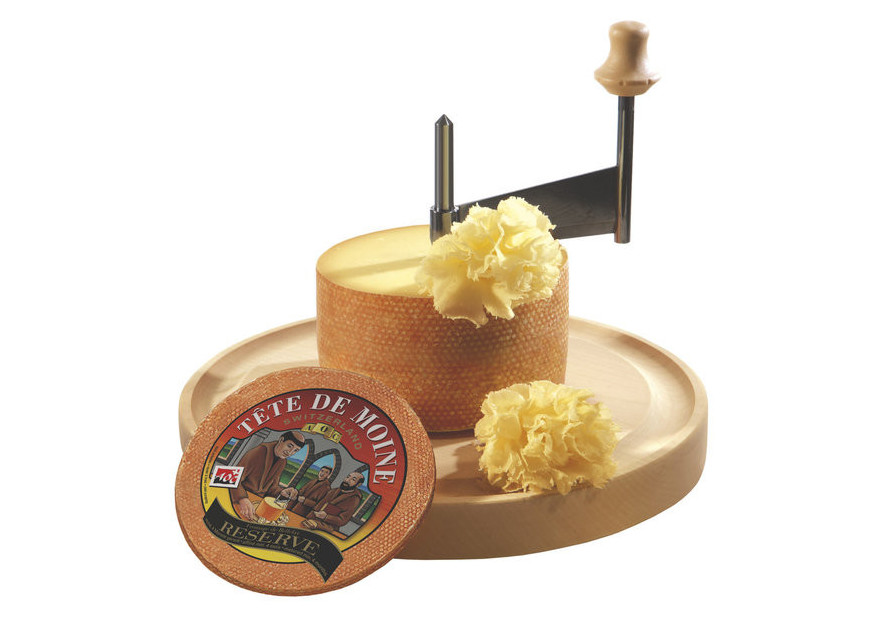
Swiss cheese a little softer than Gruyères, Tête de Moine is eaten in the form of rosettes…
What does Tête de moine cheese look like?
The monk's head is in the form of a small, sturdy cylinder. Its texture is quite firm, without going so far as to make it a "hard cheese". It takes about 10 liters of raw cow's milk to make a cheese of about 850g.
Who invented the Monk's Head?
Tête de moine cheese is said to have been created by the monks of Bellelay Abbey in the 12th century. Its production was formerly limited to winter, a period when the volume of milk was not sufficient to make great Gruyeres.
Where is Tête de Moine made?
Made in the Bernese Jura, in northeastern Switzerland, Tête de Moine cheese was a relatively confidential product until the invention of the chanterelle in the early 1980s. This small instrument which is fixed on the decapped cheese makes it possible to draw flowers, rolls, rosettes...
The Tête de Moine perhaps owes its name to a quip of Napoleon, when he conquered Switzerland: the decapped cheese made him think of the tonsure of a monk...


