


FONTAINEBLEAU - the cream of the crop
The art of Fontainebleau is an opportunity for creamer-cheese makers to distinguish themselves. But nothing prevents chefs and even individuals from trying out this light recipe.
The origin of Fontainebleau is intimately linked to the royal city of Seine-et-Marne, which has made it one of its emblems. It was in fact a creamer on rue Grande, in the heart of the city, who had the idea, at the end of the 18th century, of making abound, with the means of the time, the cream forming on the surface of his cans of fresh milk to make a fine and light foam.
The cheese dairy still located in the same place is now run by Odile and Gilles Goursat. It perpetuates the tradition of a culinary specialty that has spread throughout Île-de-France and far beyond.
The recipe for this specialty is variable, having never been registered or subject to any particular protection. Old editions of Larousse Gastronomique define it as “a sparkling mixture of whipped cream and curd, slowly coagulated, drained for thirty hours, then smoothed”, composed of 60% to 75% fat.
Today's craftsmen generally use equal proportions of drained fromage blanc and raw whipping cream blown in with cold air, the volume of which is thus multiplied by four or six. The two preparations are then delicately incorporated into each other, until a semi-firm mixture is obtained.
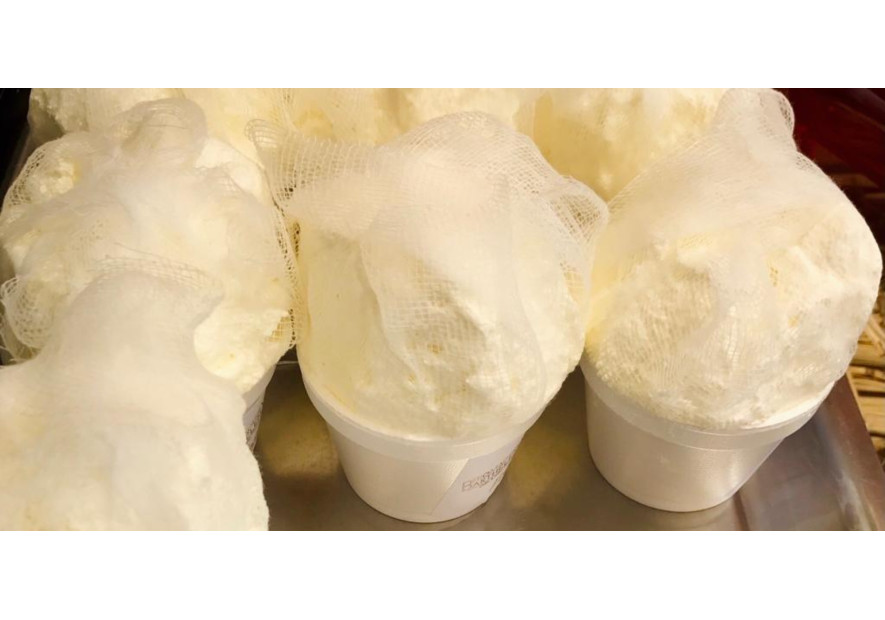
Whatever the recipe, Fontainebleau is distinguished by its presentation. The foam is traditionally marketed overflowing from a small pot of paraffin and wrapped in muslin so that it does not fall back. The light and airy consistency of Fontainebleau makes it a particularly fragile preparation, which must be consumed as fresh as possible. It then reveals very fine dairy flavors and a smooth and light texture.
Very tricky to reproduce industrially, Fontainebleau thus remains the prerogative of artisan creamers and cheese makers, who compete for the prize for the tastiest production.
Unlike Chantilly cream, Fontainebleau does not contain sugar and lends itself to a wide variety of recipes.
For dessert, it can indeed be embellished with icing sugar, maple syrup or orgeat, honey, red fruit coulis, fresh fruit... But it is also appreciated savory, in starters, quiches, velvety…
