


In November we feast on tripe and offal!
“Ugh! Yuck! It’s special… you have to love it…” hated or adored, and yet highly sought after by fine gourmets, tripe products are an integral part of our culinary heritage.
In the four corners of France, pigs' trotters, lamb's brains, beef tongue and other veal kidneys have been eaten for centuries.
Their varieties, flavors and nutritional richness go against all our preconceived ideas. In this month of November, the month of tripe products throughout France, we encourage you to (re)discover these popular dishes that are not very appetizing at first glance but are so delicious.
 True odes to regional gastronomy
 Like pastries which are available in all our regions, tripe products are not consumed in the same way in the north as in the south of France.
Each territory has its specialty in the preparation of offal: Burgundian veal soft, Saint-Flour tripoux, Pornic gras-double, Marseille trotters and parcels, oxtail in hochepot, Godeblias, Manoul… without forgetting the famous beef steak with shallot which delights Parisians.
The choice is vast, but all these recipes embody local habits and regional know-how. Often considered the unloved of gastronomy, it is clear that tripe products are regularly given pride of place by chefs, whether on the menus of gourmet bistros or on those of prestigious restaurants, including village inn menus. Flavors of yesteryear oblige, these regional specialties, whether revisited or not, delight our taste buds and warm our hearts.
Triperie has a long tradition that focuses on conviviality and sharing. It was in 1096 that the first tripe makers appeared with the opening of the Grande Boucherie at the foot of the Châtelet.
In 1292, the profession of tripper appeared for the first time in an official document, that of the waist tax in Paris. It reveals the presence of three Parisian tripe makers, who at the time were cooks, sellers of beef and sheep tripe and offal.
It was in the 19th century that tripe had its hour of glory thanks to Sidoine Benoit, a monk cook from the Abbaye aux Hommes in Caen. He invented the famous recipe for tripe à la mode de Caen, one of the best-known dishes in France.
If the Halles de Paris and the Pavillon de la Triperie in La Villette have long been the high places of the profession, it is in Rungis that everything has happened since 1973. It has even become the largest market for tripe products in the Europe or even the world.

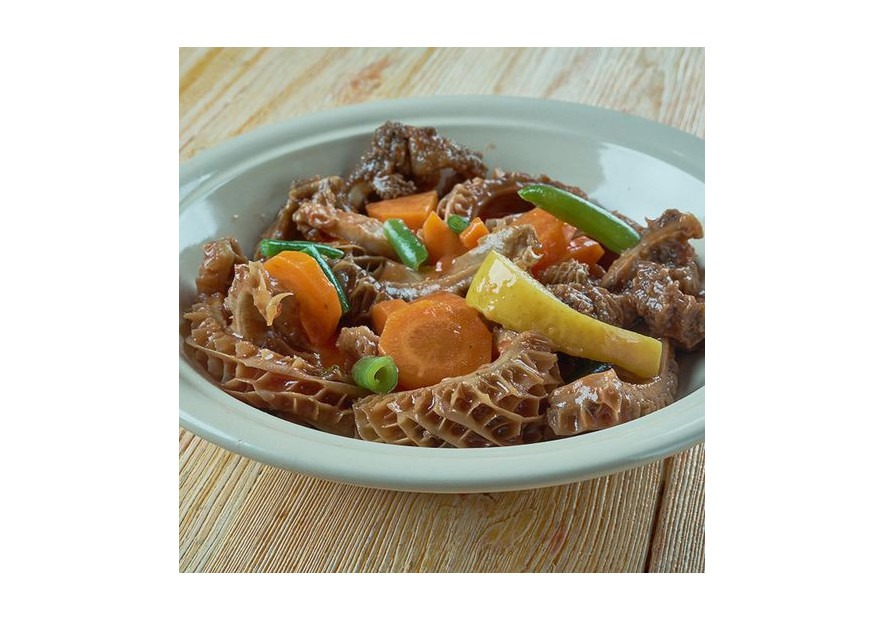
Beef tripe with Calvados Caen style - 750g
Price
€20.27


