



Is the galette cake or is it not cake?
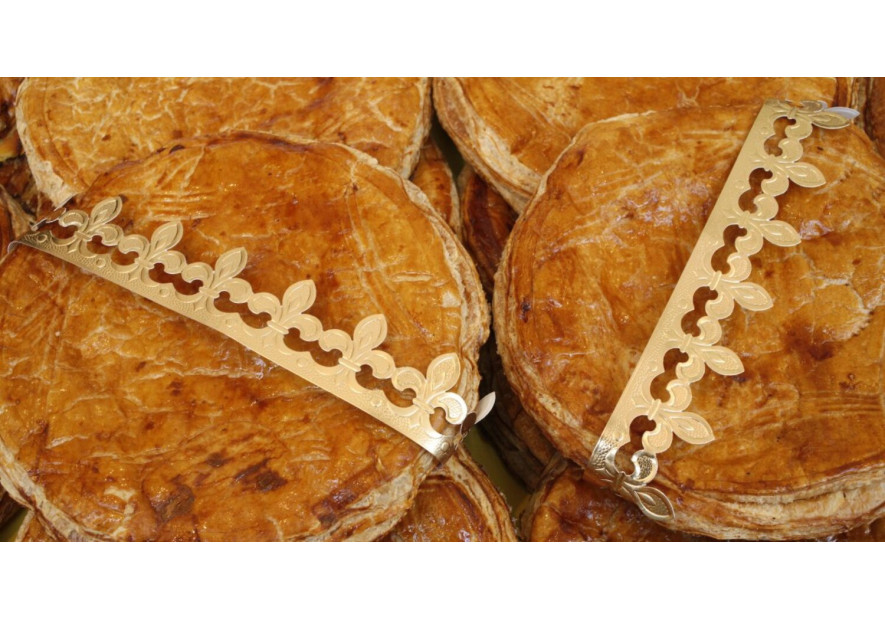
Epiphany is a Christian feast which symbolizes the "public manifestation" of Jesus attested by the visit and the homage of the Three Kings: Gaspard, Melchior and Balthazar. This is why it is also called “Day of the Kings”.
It theoretically takes place 12 days after Christmas, so on January 6th. In reality, this day not being a public holiday, it is celebrated on the first Sunday of January (if it does not coincide with the 1st).
But, as with most religious holidays, the Church has "recycled" an ancient unbelieving tradition into a symbolic religious date.
Previously, in fact, during this same period, the Romans celebrated the "Saturnalia", aptly named pagan festivals in honor of Saturn which took place in the wake of the winter solstice and which gave rise to great popular rejoicings, to the limit of debauchery.
During a banquet - it is Tacitus who reports it - a "king" was drawn by lot with the help of a bean slipped into a cake. They theoretically endowed him with all the powers (around a table), but—because you shouldn't tempt the devil after all—they dethroned him at the end of the fiesta!
In the Middle Ages, the Church replaced the cake with holy bread. The bean took the form of a little Jesus, but we always maintained a king for a day.
The Revolution saw there of course only an anti-civic tradition. She renamed the Epiphany “Festival of Good Neighborhood” — the Neighbors Day before its time! — and the galette… “Equality cake”, while the Convention preferred to call it “Sans-Culottes cake”.
As they say, everyone preaches for their parish!
Nevertheless, a few centuries later this tradition of the galette is still perennial.
Sacred for some, profane for others, it has remained a strong symbol since Antiquity… especially of gluttony!
Galette, crown or brioche, there are dozens of regional variants: from the traditional galette in puff pastry, plain or filled with frangipane which is eaten especially in Île-de-France to the garfou of Béarn, via the hull of Ariège, the crown of the Provençal Kings, the brioche with horns of Saint-Flour, the strike of Coutances or other various and varied cakes.
Their common point: there is always a bean that will designate “king or queen for a day” whoever finds it in his share and who will bring him luck for the whole year.

