


The Maroilles
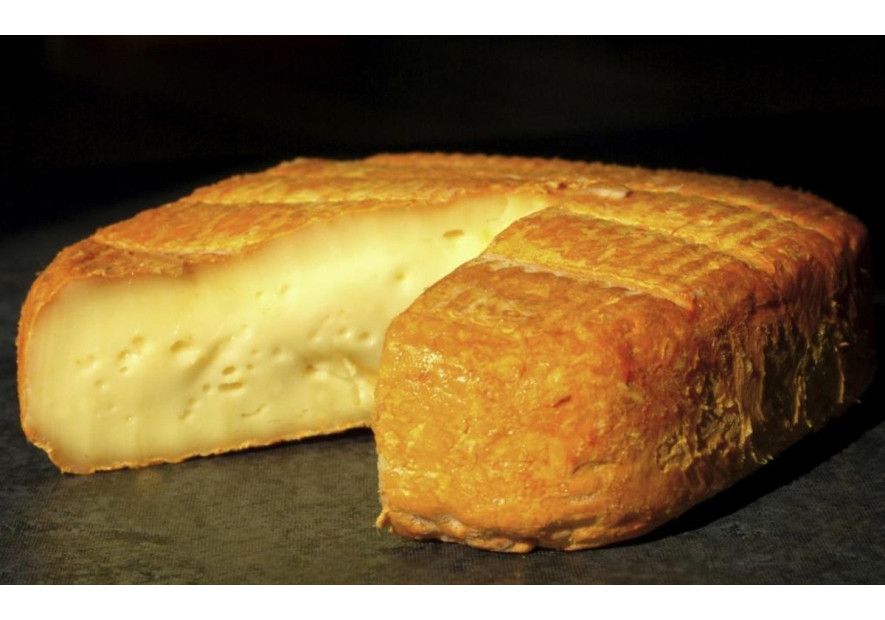
He is called maroilles or marolles from the name of the village where he was born, in the region of Thiérache, north-east of Aisne.
It comes from the Gallic Maro Lalo which means "great clearing".
the Maroilles is a historic cheese. It all started at Landrécies Abbey, better known as Maroilles Abbey. As early as the 7th century, a monk made a soft cheese there that was appreciated all around and whose gourmet reputation soon took hold: cracker, named after the Benedictine monk who developed the recipe. But the cheese was then tasted white and fresh.
Indeed, it was necessary to wait another two hundred years for a certain Enguerrand, bishop of Cambrai, to decide to undertake the refining of the initial cheese until it seemed perfect to him and that he renamed it with this name. theatrical: the “Wonder of Maroilles”.
The abbey was powerful and knew how to do it in such a way that the doors of the Royal Palace were opened to monastic cheese.
This is how its strong flavor delighted many kings: Auguste Philippe II, Louis IX the Saint, Charles VI, Louis XI, François 1er. It also aroused emotion in the sworn enemy of the latter, in other words Charles-Quint, heir to the Habsburgs.
Enemies forever, for over thirty years the two men fought fiercely against each other. But the best always arriving after the worst, in 1529, in Cambrai, they finally made peace.
History does not say if this mending after so many years of fighting was done by the grace of cheese… But nothing prevents us from thinking so!
Moreover, Jean Gosselet, abbot of Maroilles, used northern cheese to announce his arrival - or so it seems - to this all-powerful Germanic emperor, also king of Spain and Sicily.
Without even waiting to be invited! Isn't that a nice business card? A fragrant cheese as a viaticum…
It is also said that Henri IV the Béarnais, who was already known to be a fan of garlic, bought some at Bercy from a merchant on the quay to feast on it greedily.
And it is also said that Turenne, although not a native - although a native of the nearby Ardennes - stuffed himself with it without regard for his breath.
As for Fénelon - he is true Archbishop of Cambrai, therefore necessarily informed of this production - it is a cheese that he venerated.


