Roquefort AOP, the complete guide of the ebrew cheese
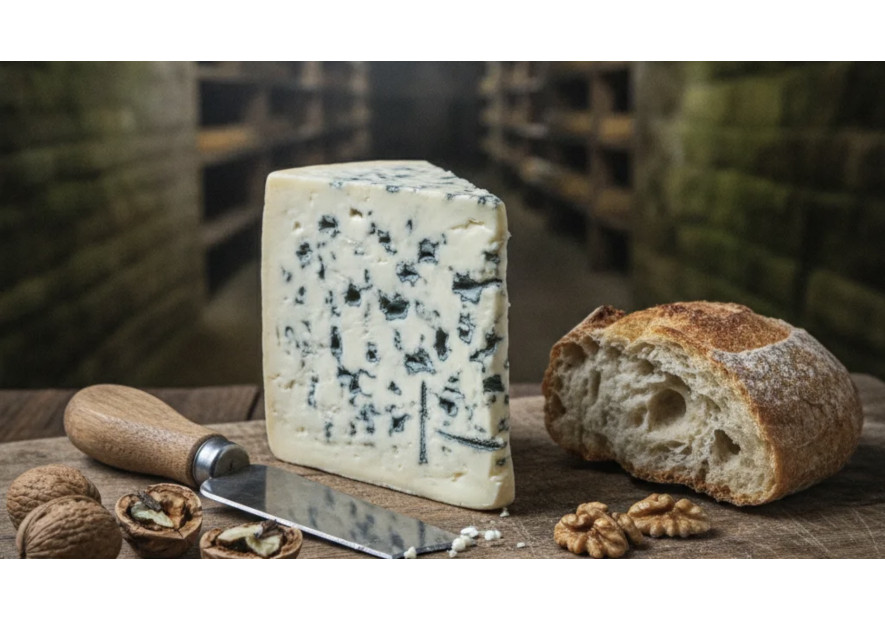
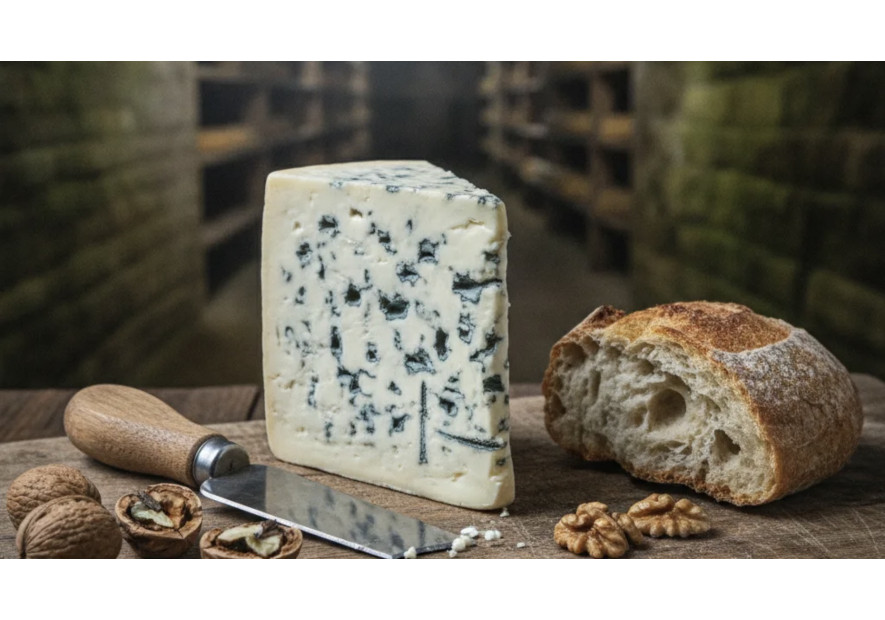
Roquefort is part of these cheeses that one recognizes even before you taste them, to its blue veins and its aromas of cellar. Behind this apparent simplicity is hiding a strict specifications, a very special milk and a refining that can not take place anywhere else than in Roquefort-sur-Solzon.
This Roquefort AOP Guide explains what really distinguishes this name of a supermarket blue, how to choose it, keep it and serve it. We share our eyes from fresh produce from the French terroir, accustomed to working with the best houses combined at the international market of Rungis.
Reading time: ~ 9 minutes
Roquefort AOP, the complete guide of the ebrew cheese
What is Roquefort AOP ?
Roquefort is a parsley cheese protected by a protected designation of origin, managed in France by the INAO. This protection is not solely on the name, it frames the origin of the milk, the breed of the sheep, the manufacturing processes and the place of refining.
Under oFFICIAL FACTORY OF INAO, the roquefort is made from raw milk and lacaune breed, then refined and matured to Roquefort-sur-Soulzon for at least 90 days. It is this triptych, raw sheep, delimited geographic area and natural cellars, which bases the identity of the product.
Roquefort is presented by the sector as the only French PARTERN cheese under AOP made exclusively from sheep's milk. The milk comes from farms in a delimited area covering the Aveyron mainly, in Occitania, and some municipalities of neighboring departments. Manufacturing and refining, they remain attached to Roquefort-sur-Solzon commune. A blue sheep cheese produces elsewhere, even with comparable know-how, so can not bring this denomination.
Roquefort-sur-Solzon and its natural cellars
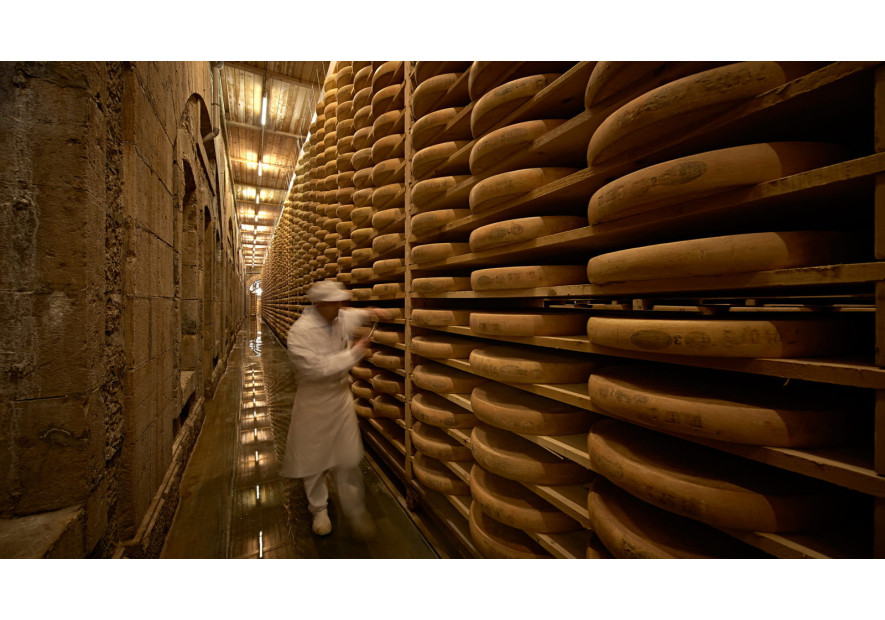
The originality of Roquefort is a lot at its place of maturation. The ripening cellars are dug in the limestone massif that dominates the village, a tray traveled with geological faults called Fleurines. These natural cracks circulate a fresh and wet air, at regular temperature, and create a very stable underground microclimate. It is in this environment that the cheeses develop their Persiab, their creamage and their aromas of characteristic cellar.
This link instead is not symbolic, it is entered in the specifications of the appellation published by the Ministry of Agriculture. A refined roquefort apart from these cellars loses the right to appellation, which explains the concentration of ripening homes in a very small perimeter of Aveyron.
How is the Roquefort AOP
Lacaune Sheep Milk
It all starts with milk. The Roquefort AOP is made with raw milk and whole, neither skimpseed nor pasteurized, as recalled by the official documentation of the sector. The specifications frames the collection, including the rules on daily drafts, on the time to be respected after lambing and storage of milk in closed and refrigerated containers.
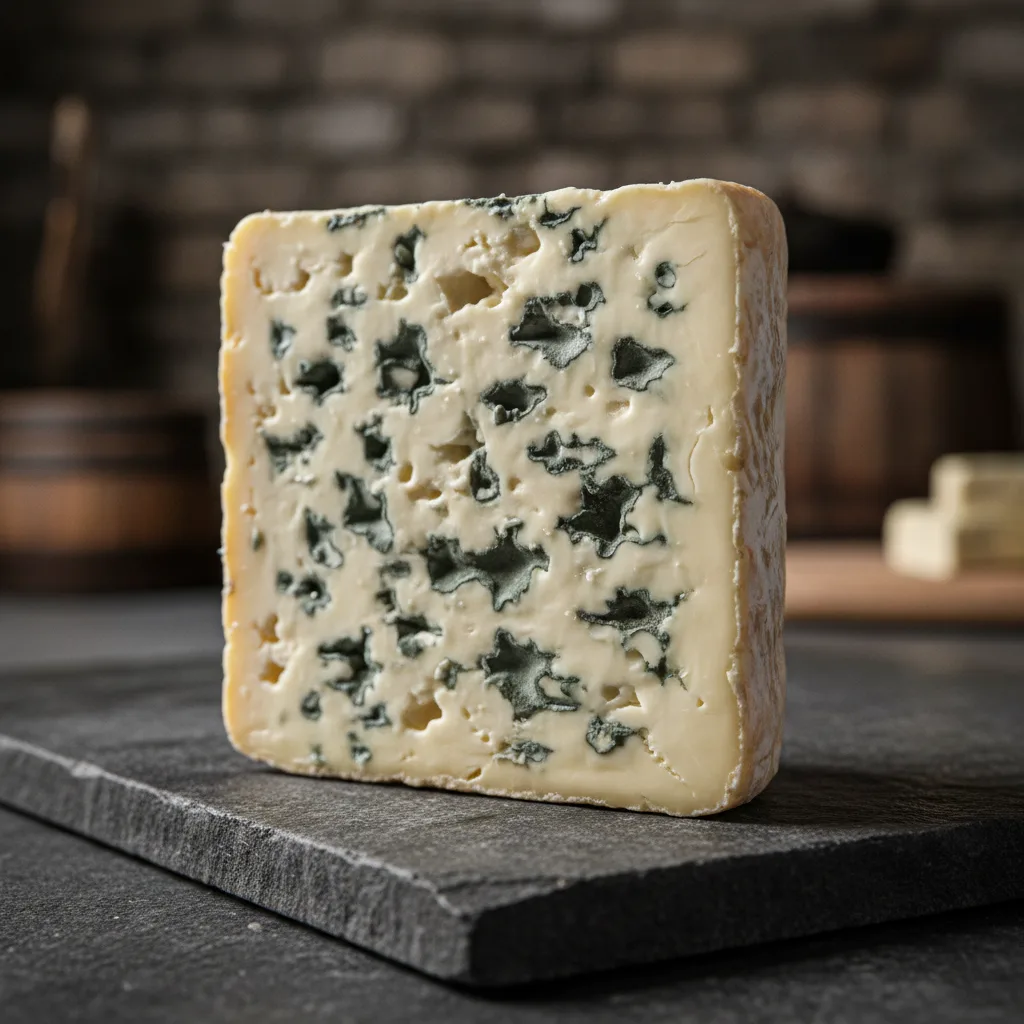
The freezing milk, curd or cheeses during manufacturing is prohibited. This requirement on the raw material explains a portion of the price of the product, since the Lacaune sheep produces much less milk than a dairy cow.
Sowing and Persiab
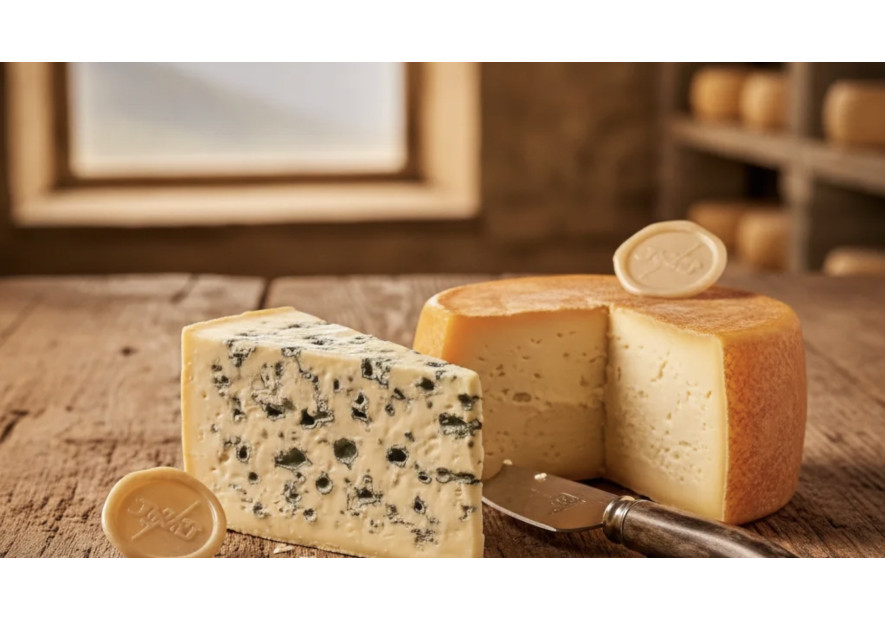
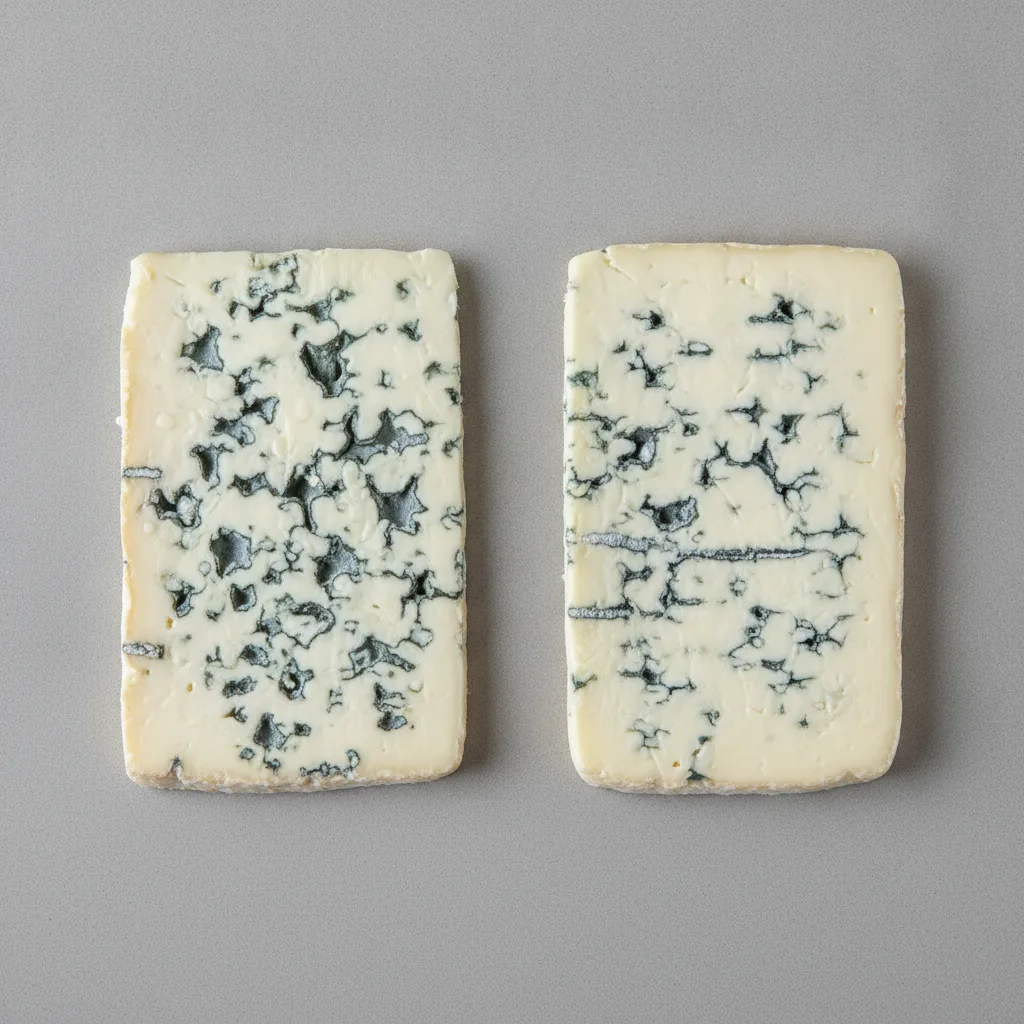
The curd is seeded with Penicillium Roqueforti, the mushroom responsible for the blue and green veins that browse the dough. The cheese breads are then pierced to allow the air to penetrate, allowing the Persiab to develop from the inside. It is this ventilation work that gives Roquefort its irregular marble, very different from a very uniform industrial blue.
Drip, salting and refining
The specification provides for drying without pressing and dry salting, two steps that directly influence the texture and aromatic concentration. Then comes the refining in a cellar, with a minimum duration of 90 days according to the INAO. After this first phase, the cheeses can be wrapped in a microporous sheet that slows the progression of the fungus, then continue their maturation at low temperature before being packaged in their characteristic aluminum packaging.
To remember
A Roquefort AOP can not be refined less than 90 days, or other than Roquefort-sur-Solzon. These two criteria are already sufficient to spread it from most blue cheeses sold under a generic name.
What taste has Roquefort AOP
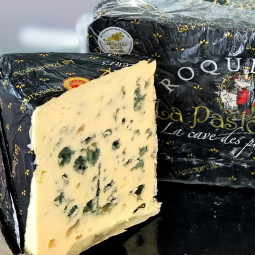
The Roquefort recognizes a paste at the same time creamy and friable, which melts in the mouth while leaving chips of pawn. The aromatic profile combines the power of sheep's milk, marked salinity, fungus and cellar notes, and a long finish, sometimes slightly pungent. The intensity varies depending on the spinning time, the density of the pawn and the know-how of the ripening house.
One point deserves to be emphasized, the intensity does not make the quality. A successful roquefort is mainly due to its equilibrium, between aromatic power, mastered salinity, creamy and milky freshness. A cheese that expresses only salt or spice is usually a sign of a poorly conducted refine or approximate storage.
Roquefort AOP or simple blue cheese, what differences
The confusion is frequent in department because many blues play on a nearby presentation. The table below summarizes the criteria that actually separate the two families.
Comparison between Roquefort AOP and generic blue cheese
|
Criterion |
Roquefort AOP |
Generic blue cheese |
|---|---|---|
|
Milk |
Raw milk and flying sheep |
Cow's milk, often pasteurized |
|
Race |
Lacaune Sheep |
Unconnected |
|
Area |
Delimited area, Aveyron and surroundings |
Free |
|
Refining |
90 days minimum in natural cellars |
Variable, often shorter |
|
Refining place |
Roquefort-sur-Solzon mandatory |
Unrated |
|
Control |
AOP specifications, official controls |
General regulation |
How to recognize a real Roquefort AOP in store
Check the label and name
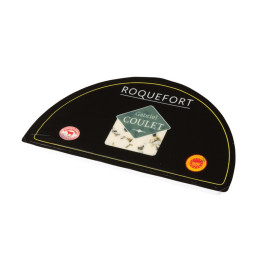
The first verification is the simplest, the word Roquefort must appear on the package, accompanied by the AOP logo. A mention of the blue or blue-blue blue cheese type is in no way a warranty of appellation. The label must also indicate raw milk, the name of the refining house and the health identification number.
Examine the dough and the PARNER
The visual exam complete this control. Here are the points to watch before buying a portion.
-
A homogeneous, wet and supple paste, without dry crust or cured edges.
-
A visible and distributed Press, or absent or invasive to the point of blacken the dough.
-
A coherent ivory color, without brown areas or abnormal spots.
-
A frank smell of cellar and sheep, without aggressive fermentation note.
-
An intact aluminum package, a sign of a respected cold chain.
Good to know
The choice also depends on the use. For a tray, favor a balanced and unctuous Roquefort, to find in our selection of cheeses and creams. For a sauce or a gratin, a more powerful cheese will remain perceptible after cooking, where the aromas still fade.
How to keep the Roquefort after opening
Keep it in the refrigerator
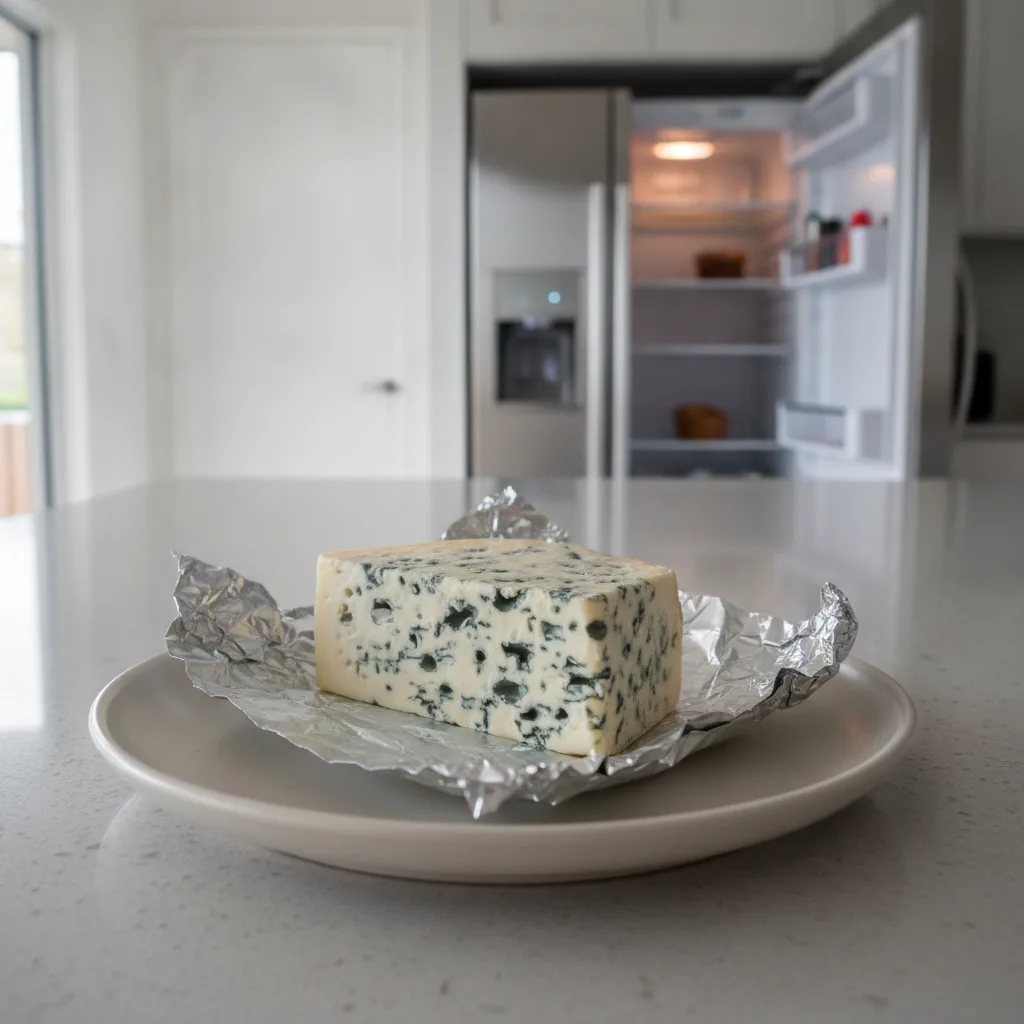
Roquefort is preserved in the refrigerator, in the lower part or in the vegetable tray, where the temperature remains the most stable. Professional landmarks evoke a beach from 6 to 8 degrees. The main enemy is the ambient air, which dries the dough and alters the unctuous in just a few days. After opening, replace the cheese in its original aluminum foil, then in an airtight box, or use a suitable cheese bell.
Avoid repeated backwards between the cold and the ambient temperature, which accelerate the degradation of the texture. Follow the date indicated on the package and always check the appearance, odor and texture before serving. Finally, take out the roquefort of the refrigerator about an hour before tasting, like the recommend the sector, so that he finds his aromas and a melting texture.
Good reflexes before the service
-
Keep cheese in the refrigerator.
-
Avoid sudden temperature variations.
-
Limit direct contact with the air.
-
Use a suitable box or package.
-
Remove the cheese before the service.
-
Respect the date indicated on the package.
-
Check the odor, texture and appearance before consumption.
Tasting and agreements
Grant Roquefort AOP with drinks
The best-known agreement remains that of Roquefort with a sweet or fluffy white wine, whose gentleness balances the salinity of the cheese. A natural natural wine, a soft and shallow red, amber beer or a soft cider also work. Powerful tannins, they often conflict with the Persiab and accentuate bitterness.
Kitchen chord ideas
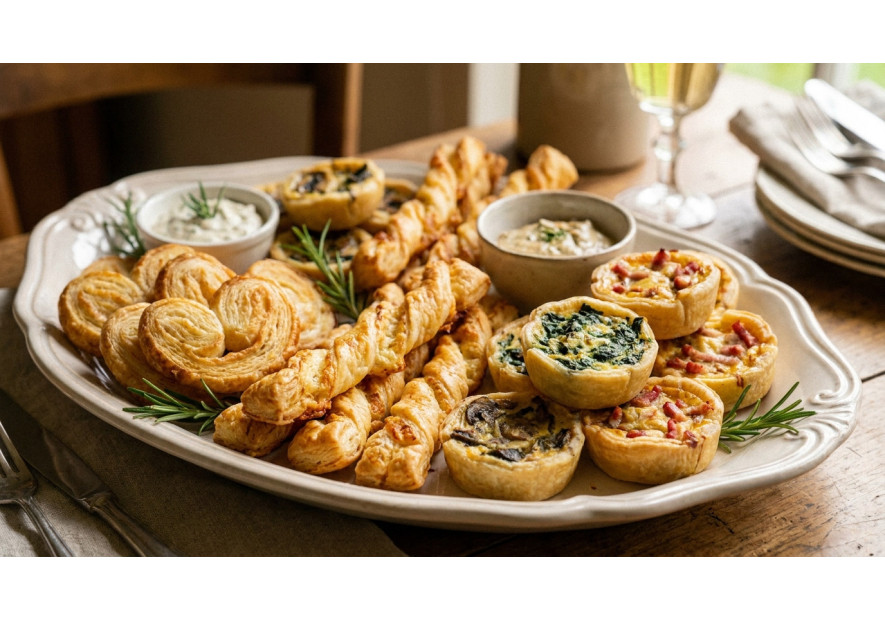
Plate side, Roquefort naturally agrees with pear, apple, grapes, fig, nuts and lavender honey, served on a good rustic bread, or accompanied by toasts for cheese. In the kitchen, it lends itself to sauces for red meats, gratins, fresh pasta, salty pies, endives and potato preparations.
A professional council, add the cheese gradually and at the end of cooking, because its salinity quickly dominates the other ingredients. On a plateau, it naturally finds its place alongside other great classics of the French soil.
Raw milk and sanitary precautions
Because it is made of raw milk, Roquefort reports French health recommendations for this category of cheeses. The authorities advise pregnant women, young children and immunocompromised people to avoid raw milk cheeses. For precise nutritional values, calories, proteins, lipids and salt, refer to the product label purchased or the ICQUAL database published by ANSES, rather than approximate averages.
Where to buy Roquefort AOP and have it delivered to Europe
Buy Roquefort AOP Online or Shop
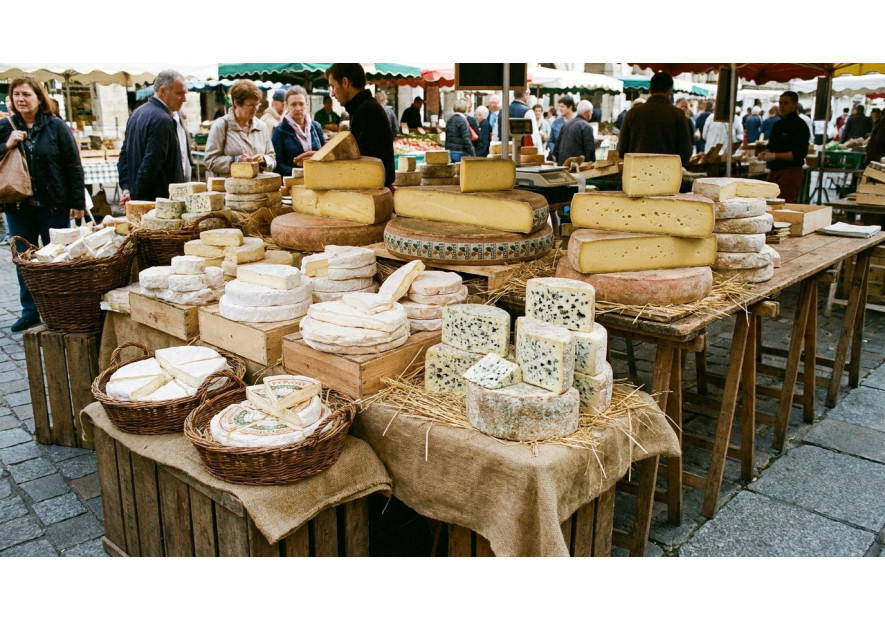
Roquefort is bought in a refined cheese, in fine grocery with Roquefort or online homes. For hotels in the hotel and catering professionals installed outside France, online purchase often remains the most regular solution, provided you check the shipping conditions. A raw milk cheese hurts cold chain breaks, which makes the conditioning determining.
In Very Gourmand, we ship our fresh products from the international rungis market, in refrigerated isothermal parcel, with a delivery in Europe in 24 to 48 hours according to an indicative time depending on the carrier. Our catalog brings together more than 2,000 French local products selected from the best houses, and our customer reviews are published on Verified Reviews.
Optimize the cost of the order
The price of a raw milk AOP cheese and the shipping costs of a refrigerated package are higher than those of a standard product, but they correspond to a stress raw material, a long refinement and control of the controlled cold. For Horeca establishments, consolidate several cheese and charcoal references on the same order remains the most effective way to cushion this logistic cost.
Can we visit Roquefort cellars
Yes, Roquefort-sur-Solzon's ripening cellars are visited and constitutes one of the major gastronomic attractions of Aveyron. Guided tours are organized in several houses, with an underground course explaining the flowers, the Persiab and the maturation stages, followed by a tasting. Schedules and rates evolve depending on the season and houses, so it is better to check them before moving. It is a visit that luminates concretely what the specifications imposes on paper.
Go further with Roquefort AOP
Roquefort AOP is a constraint product, raw milk of Lacaune sheep, scaled area, dripping without pressing, dry salting and 90 days minimum ripening in Roquefort-sur-Solzon cellars. These rules explain both its price, its regularity and its unique character among the Patterned Cheeses. Well chosen, well preserved and released in time of the refrigerator, there remains one of the most beautiful entries in the world of French cheeses.
To conclude on Roquefort AOP
In summary, this Roquefort AOP Guide recalls that the appellation is based on a raw milk of Lacaune sheep, a strictly delimited production area and a long ripping in the natural cellars of Roquefort-sur-Solzon. Taking the time to choose your cheese, control the packaging and respect the rules of conservation and service, you fully enjoy its aromatic potential, whether on a plateau, in the kitchen or the map of an establishment.
FAQ on Roquefort AOP
Can Roquefort be frozen ?
The freezing is not recommended because it breaks the structure of the dough and makes the cheese granulous to thawing. If you need to handle a stock, it's better to order formats adapted to your consumption pace.
Why is Roquefort packed in aluminum ?
The aluminum packaging protects the paste from light and air, limits the drying and stabilizes the PERSON. After the cellar output. It is also the best container to close a portion started.
What quantity will predict per person on a tray ?
At the end of the meal, count a modest portion by guest, the roquefort being salted and powerful. It wins to be served in small quantities alongside two or three other cheeses with contrasting profiles.
Can we cook Roquefort without denaturing it ?
Yes, provided it incorporates it out of the heat or at the end of cooking. A heat too strong and prolonged accentuates bitterness and losing milking notes.
Does Roquefort suitable for a collective restoration service ?
It lends itself well in sauce or in preparation, because its intensity makes it possible to use little. For a cup service, plan stable cold conservation and a cutting on demand.


Préfou roquefort and walnuts - 300g