Sausage Guide Dry | Regions, ripening & tasting
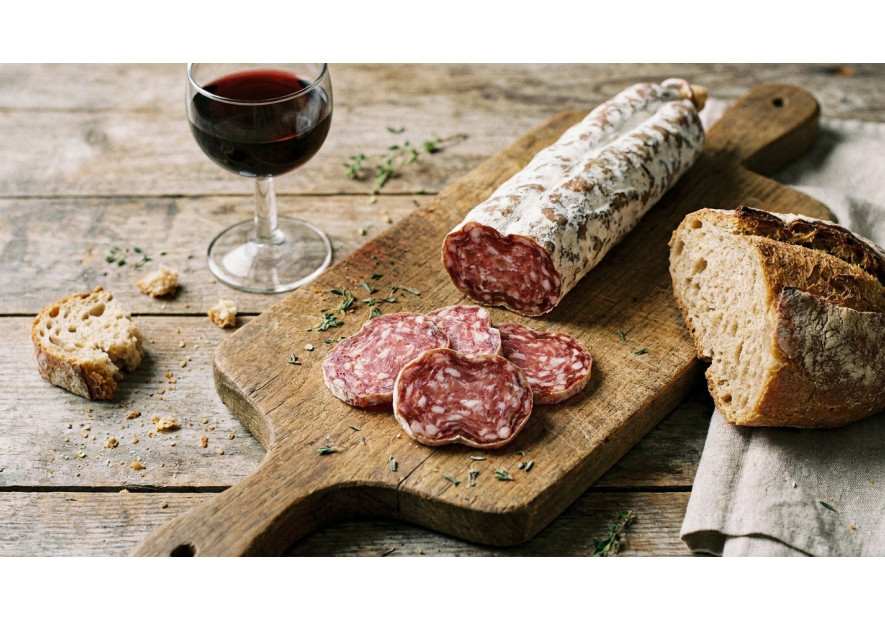
The dry sausage is one of the most emblematic French charcuteries. Behind this apparent simplicity hide terroirs, recipes and very different know-how. With this guide, you will understand what the "Dry Sausage" name is actually in France: official requirements, regional traditions and keys to enjoy.
The ultimate guide of French dry sausage: regions, ripening, tasting
Reading time: ~ 12 min
- Table of contents
- What is a French dry sausage
- Dry sausage guide by regions and soils
- Fermentation, drying and refining: Understanding key steps
- IGP Labels, Red Label and Traditional Specialties
- How to taste the French dry sausage
- Frequently asked questions about French dry sausage
What is a French dry sausage
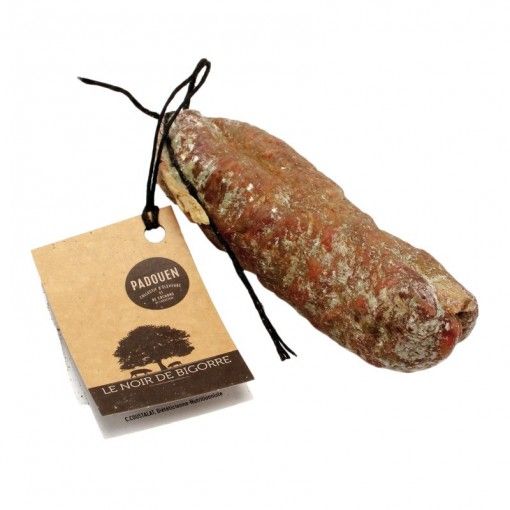
The officials of the official charges, in particular that of the dry sausage of Auvergne, define the product as a preparation of chopped raw porcous meat, salty, seasoned, then subjected to fermentation and drying. Fermentation and drying transform raw meat into a stable charcuterie at room temperature, firm texture and complex aromatic bouquet.
- Pork and carefully selected pork fat
- A mastered salt, sometimes dry, sometimes in brine
- Variable spices and aromatics according to the regions (garlic, pepper, wine… )
- A controlled fermentation phase that develops a specific flora
- Prolonged drying in precise conditions of temperature and humidity
According to the specifications of the dry sausage of Auvergne, the product is neither smoked nor coated, which already illustrates significant regional differences.
Dry sausage guide by regions and soils
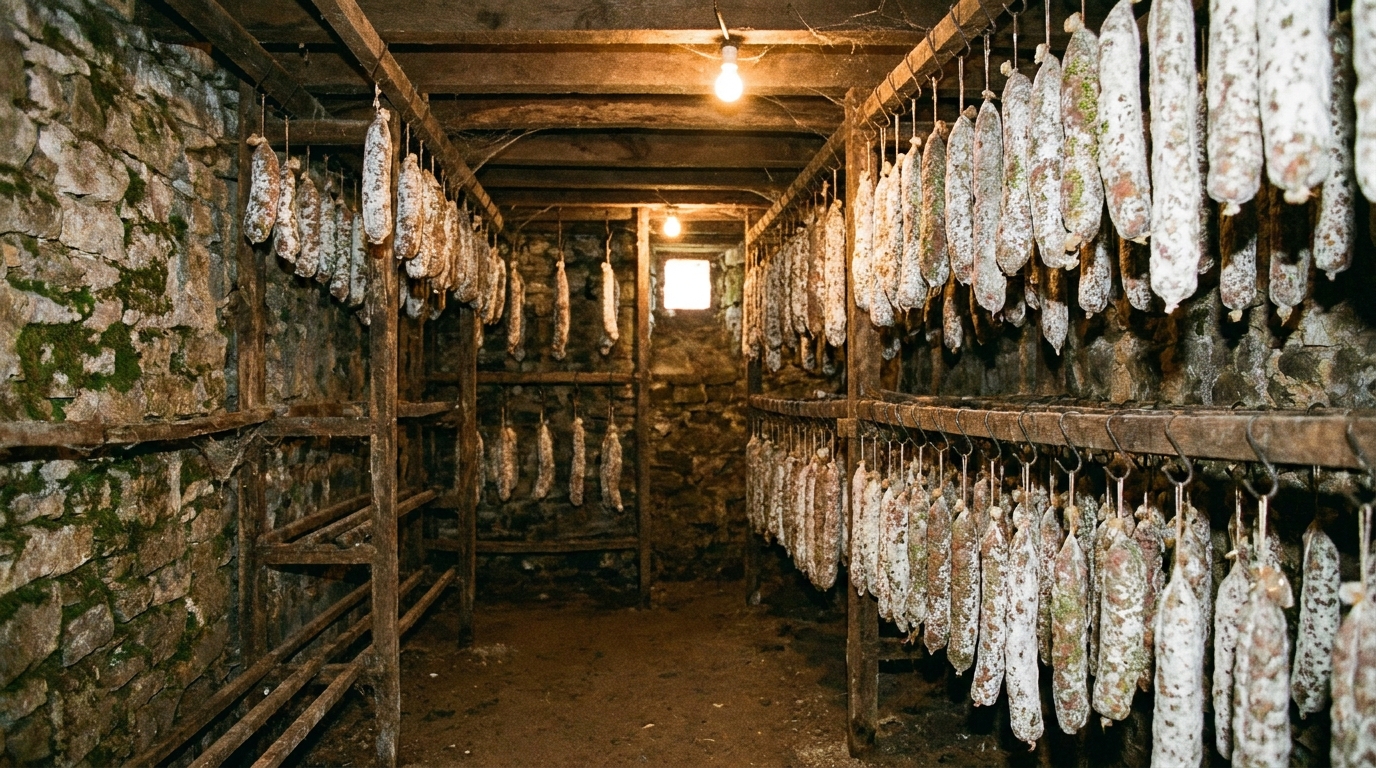
Dry sausage of Auvergne IGP
Reference of French charcuterie, it covers a large part of the Massif Central (Cantal, Haute-Loire, Puy-de-Dôme). In the mouth, we seek the balance between meat, the melting fat and garlic, without excess of spice.
Dry sausage of the Ardèche IGP
The Ardèche imposes a minimal dry weight of about 200 g, a sign of a slow drying of complex aromas. The mountain climate promotes this maturation, and the seasoning remains discreet to put the meat forward.
Dry sausage of IGP beauty island
The Salciccia Corsica is distinguished by a large grain hash, a dry salting, a generous pepper seasoning and a possible smoking in local hardwood. The result: a powerful aromatic profile, often tasted in fine slices on aperitif.
Saucissons from Lyon
Rosette and other Lyon specialties recognize a large caliber hose, a homogeneous hash and sober seasonings leaving the quality of the meat. Their reputation far exceeds the region.
Saucissons from Pyrenees and other terroirs
In the Pyrenees, the cold and dry climate is suitable for natural drying for pyrenean sausages. According to the valleys, a slight smoking can be added, giving more rustic profiles, very appreciated on mountain boards.
Fermentation, drying and refining: Understanding key steps
Fermentation
Embossed in hose, the sausage passes in controlled overall; Lactic bacteria lower the pH, ensuring microbiological safety and first flavors. IGP specifications set pH target values and strict analytical checks.
Drying
The product then loses an important part of its water; The flavors are concentrated and conservation lies down. Duration, temperature and hygrometry vary in diameter and fat rates, but a successful drying offer firm texture, homogeneous color and absence of surface defects.
Large ripening
For the amateur, refining encompasses fermentation and drying. In practice: a fine caliber refines faster and remains firm; A big caliber requires more time and develops more complex aromas.
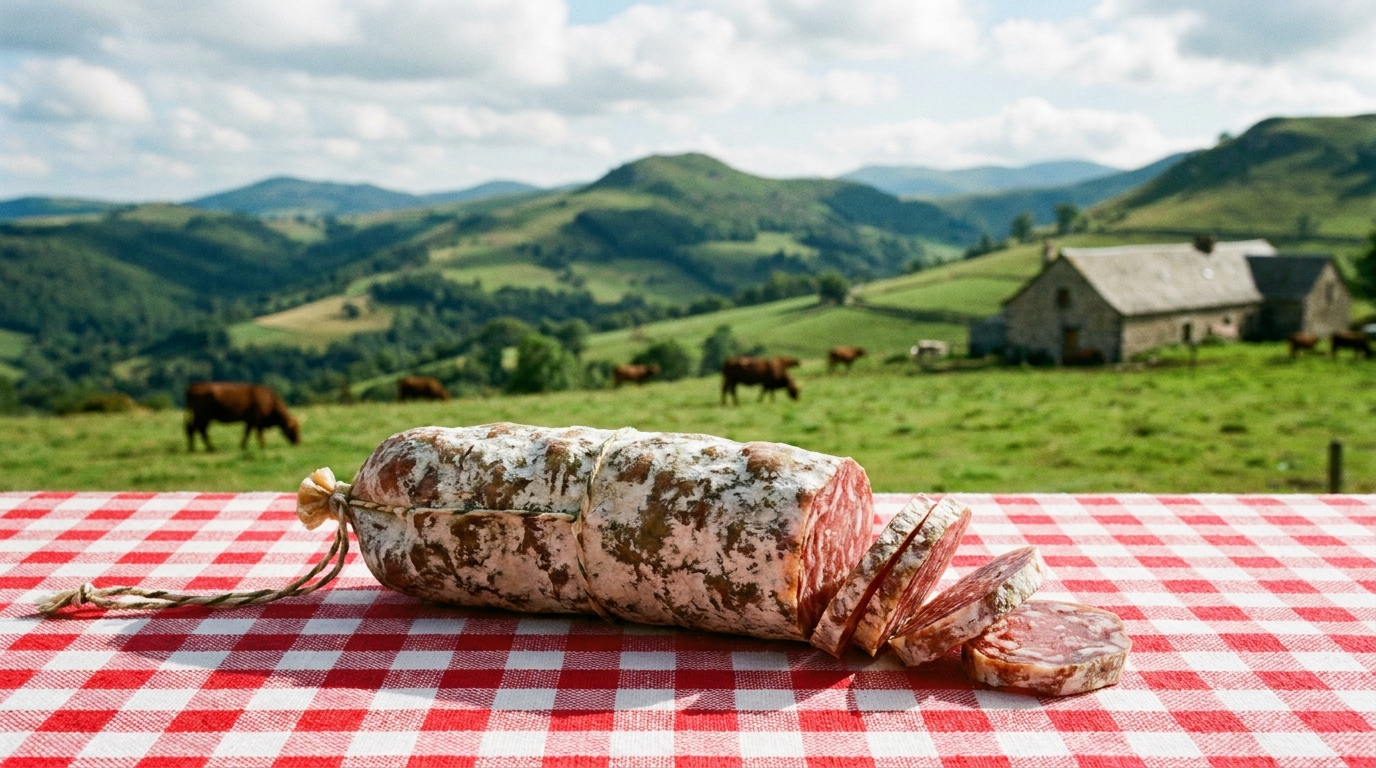
IGP Labels, Red Label and Traditional Specialties
What does the IGP guarantee ?
Protected geographic indication requires that at least one key step (often the development) take place in the defined area and that the product derives its reputation for this origin; External audits control compliance.
What the Red Label changes
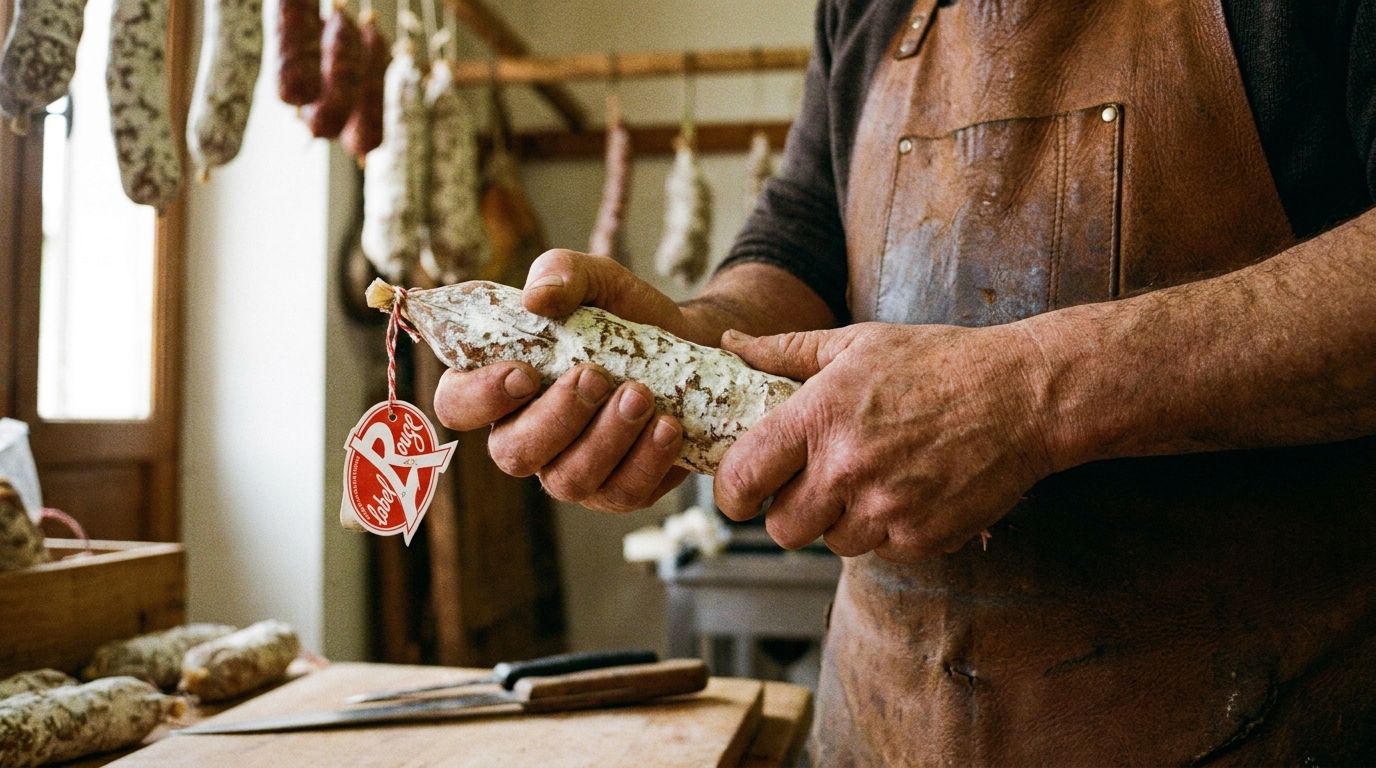
Without a geographical concept, the red label reports a higher level: reinforced analytical criteria, high-end raw materials and regular tastings that must mark a clear difference with the standard product.
And specialties without official sign
Lyon rosette or some Pyrenean sausages do not always bear an official sign but are based on historical know-how. Confidence in the producer, transparency and your own tasting remain determinants.
How to taste the French dry sausage
Service temperature and cutting
Serve it moderately fresh for the fatness to be melted. Take out the product of its packaging a few minutes before tasting; Cut fine slices for very aromatic or smoked profiles, a little thicker for a big grain hash.
What to observe
Regular appearance, dark red color, texture or dry neither soft, aromas evoking matured meat, spices or smoking; The salt-acidity-fat balance and aromatic persistence without bitterness are the main quality indicators.
Accords and uses
Classically, he accompanies the aperitif with country bread and light red or dry white wine. The corsican smoked sausages are marked well to tasting beers, while a bright white or effervescent balances the fat of a sausage of Auvergne or Ardèche.
FAQ – Frequently Asked Questions about French Dry Sausage
Is the dry sausage still done with pork ?
For IGP cited (Auvergne, Ardèche, Island of Beauty), yes: only pork to the definite criteria. Other meats exist, but out of these specifications.
Difference between a SEC IGP sausage and a non-labeled artisanal ?
The ORIGIN and PROCESS framework via a third party. A craft product without IGP can be excellent, but the quality is based on the reputation of the craftsman and your personal tasting.
Is a smoked sausage less qualitative ?
No; Smoking is an integral part of some traditions (Corsica). It all depends on finesse and balance: it must neither mask the meat nor dominate spices.
How to keep a dry sausage ?
Store it in a cool, dry and ventilated place. Once started, wrap it in a clean linen; Avoid hermetic packaging that hold moisture and observe the dates indicated by the manufacturer.
Conclusion and synthesis on the French dry sausage
Between official definition, varied terroirs, fermentation and drying process, quality labels and tasting tips, the French dry sausage reveals a great diversity of styles. Keeping an eye on the origin, the signs of quality and your own tasting criteria, you can choose and fully appreciate each type of dry sausage.
The French dry sausage is more than just a slice of cold cuts. Between IgP, regional traditions and red label, you have an exceptional palette for dialing trays and cards. To explore these differences, see now our selection of french dry sausages and discover every terroir in detail.