


The great return of the pâté (en) crust
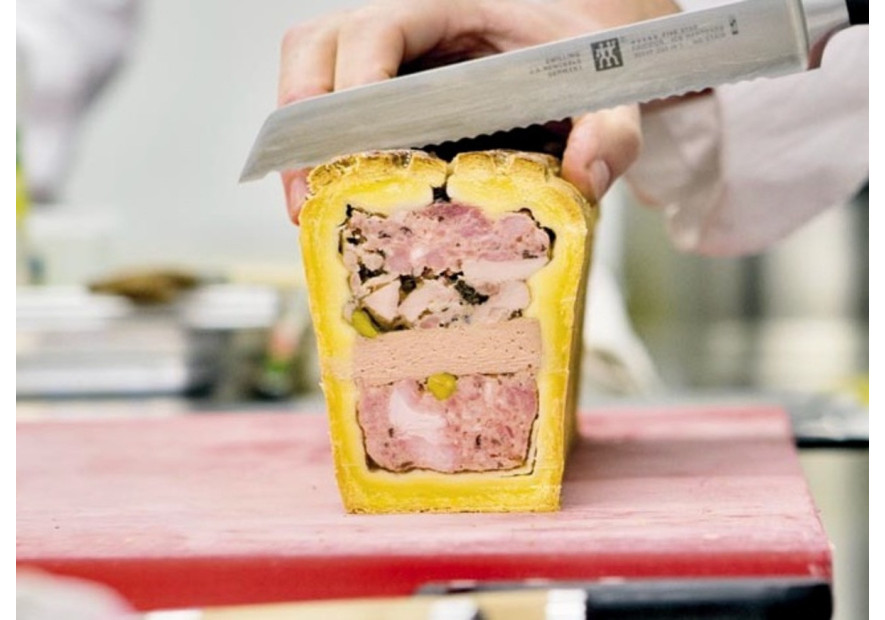
Here is one that does not encrust. In recent years, the pâté-crust or pâté en croute has reappeared on restaurant menus and on the shelves of caterers.
At the same time, this product requires total control, whether in the balance of the stuffing or the creation of a fine and crispy dough. A great way to impress your guests, as an aperitif or as a main course.
Pie or pie?
It all depends on the region! In Lyon and Reims, it's pie. In the rest of France, pie. Obviously, the dish takes its name from the dough that coats it, but it has changed in recent centuries. Today, it is puff pastry or is made with flour, starch, egg and butter. The goal is for it to be as thin and crispy as possible, to bring a balance of textures and flavors to the stuffing.
Before the Renaissance, the crust was made of flour and fat, mainly veal or pork. It was used to prevent oxidation of the stuffing and to transport the dish more easily. It was during the Renaissance and the development of different techniques such as puff pastry that it became edible and served to preserve the moisture and softness of what it contains.
The pie requires the skills of pastry chef, cook and butcher.
It sometimes takes up to four days to make one. You have to marinate your meat, make the dough and let the dish mature a little for a symbiosis of flavors.


Half pie of guinea fowl and morels ±2.3kg
Price
€127.87


Half pâté superior Label Rouge ±2kg
Price
€109.03


Richelieu "Le Bistronome" mini pie with duck - 450g
Price
€12.57


Half bressan pâté ±2.2kg
Price
€68.42

Half Richelieu mousse pie ±2.5kg
Price
€69.69


Half pâté in crust of pastry veal ±2.4kg
Price
€102.08


Mini pie "Le Bistronome" natural - 450g
Price
€10.10


Half chicken pie with mustard ±2.4kg
Price
€88.67
- On sale!

Half rabbit pâté with hazelnuts ±2.4kg
Price
€99.25


